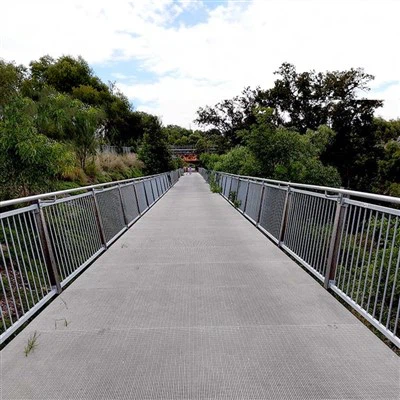
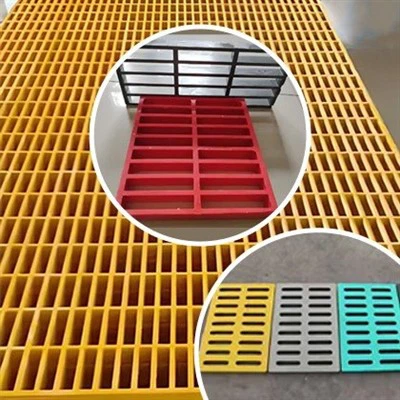
Hey there! As a supplier of Pedestrian Pultruded Grating, I often get asked about the installation height of this nifty product. So, I thought I'd take some time to break it down for you.
First off, let's talk a bit about what Pedestrian Pultruded Grating is. It's a type of grating made through the pultrusion process, which is super cool 'cause it creates a really strong and durable product. You can check out more about Pedestrian Pultruded Grating on our website. This grating is commonly used in areas where people walk, like walkways, platforms, and even some industrial settings. It's lightweight, corrosion - resistant, and can handle a good amount of foot traffic.
Now, when it comes to the installation height, there isn't a one - size - fits - all answer. It depends on a few factors, and I'll go through them one by one.
1. Safety Considerations
One of the most important things when installing Pedestrian Pultruded Grating is safety. If the grating is too low, it might be at risk of getting damaged by people's feet, especially if there's a lot of heavy - footed traffic. On the other hand, if it's too high, it can create a tripping hazard.
In general, for public walkways, the installation height should be kept as close to the ground level as possible, usually within 1 - 2 inches (2.54 - 5.08 cm) above the surface. This way, people can easily step on and off the grating without having to raise their feet too high. For example, in a shopping mall's indoor walkway, we'd want the grating to blend in smoothly with the floor. If there's a little step up, it can be a bit of a hassle for kids, the elderly, or people with disabilities.
In industrial settings, where there might be forklifts or other machinery around, the height needs to be carefully considered. The grating should be high enough to avoid getting crushed by the wheels of the machinery but low enough so that it doesn't interfere with the movement of workers. A good height in this case could be around 3 - 5 inches (7.62 - 12.7 cm) above the ground.
2. Drainage Requirements
Another factor that affects the installation height is drainage. Pedestrian Pultruded Grating is often used in areas where water needs to drain away quickly, like in outdoor walkways or near swimming pools.
If the area has a high water flow rate, the grating needs to be installed at a height that allows water to flow freely beneath it. A common practice is to install the grating at a height of 2 - 4 inches (5.08 - 10.16 cm) to ensure proper drainage. This way, water can pass through the grating and flow into the drainage channels without causing puddles on the surface.
Let's say you're installing the grating around a pool. You want the water splashed out of the pool to quickly drain away. Keeping the grating at a suitable height can prevent water from collecting and making the surface slippery, which is a major safety concern.
3. Structural Support
The installation height also depends on the structural support available. The grating needs to be supported properly to ensure its stability and longevity. If the support beams are weak or not spaced correctly, the grating might sag or break, especially under heavy loads.
In most cases, for a standard Pedestrian Pultruded Grating, the support beams should be placed no more than 36 inches (91.44 cm) apart. When installing the grating on these support beams, the height is usually set based on the thickness of the beams. If you have thick support beams, the grating will be installed at a slightly higher height to ensure that it sits firmly on the beams.
For instance, if you're using GRP Pultruded Grating, which is a popular type of pedestrian grating, you need to make sure that the support structure can handle its weight and the load it will carry. Stronger support might allow for a slightly higher installation height if other conditions are met.
4. Accessibility Needs
Accessibility is a big deal, especially in today's world. We need to make sure that our Pedestrian Pultruded Grating is accessible to everyone, regardless of their physical abilities.
For wheelchair ramps or areas where people with mobility aids need to pass, the installation height should be even more carefully considered. The slope of the ramp and the height of the grating need to comply with accessibility standards. Usually, the height difference between the grating and the adjacent surface should be very minimal, preferably within 0.5 inches (1.27 cm).


For example, in a hospital walkway, where wheelchair users are frequent, the Walkway FRP Grating should be installed in a way that it doesn't impede the movement of wheelchairs. A smooth and level surface is crucial for easy access.
Installation Tips
When you're actually installing the Pedestrian Pultruded Grating, here are a few tips to keep in mind. First, make sure the surface where you're installing the grating is clean and level. Any debris or unevenness can affect the installation and the performance of the grating.
Use the right fasteners to secure the grating to the support beams. We usually recommend using stainless - steel fasteners because they're corrosion - resistant. And don't forget to check the alignment of the grating. It should be straight and evenly spaced to ensure a safe and aesthetically pleasing installation.
Conclusion
So, as you can see, the installation height of Pedestrian Pultruded Grating is influenced by several factors, including safety, drainage, structural support, and accessibility. There's no fixed number, but by considering these factors, you can determine the best height for your specific application.
If you're in the market for Pedestrian Pultruded Grating or have any questions about its installation, don't hesitate to reach out. We're here to help you make the right choice for your project. Whether you need a small amount for a backyard walkway or a large quantity for an industrial complex, we've got you covered.
References
- Industry standards for pedestrian grating installation
- Manufacturer's guidelines for Pedestrian Pultruded Grating