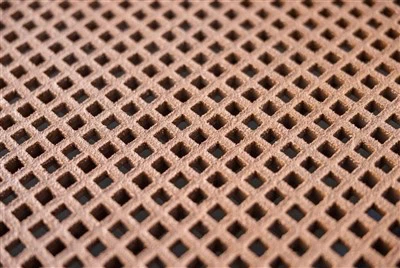
Temperature is a critical environmental factor that can significantly influence the performance of FRP (Fiberglass Reinforced Plastic) rectangular mesh grating. As a supplier of high - quality FRP Rectangular Mesh Grating, understanding these impacts is essential for providing accurate product information and ensuring customer satisfaction.
1. Physical and Mechanical Properties at Different Temperatures
1.1 Low - temperature Effects
At low temperatures, the mechanical properties of FRP rectangular mesh grating can undergo notable changes. The resin matrix in FRP becomes more brittle as the temperature drops. This brittleness reduces the material's ability to absorb energy during impact. For example, in cold climates where the temperature can fall below freezing, the grating may experience a decrease in its impact resistance. A sudden impact from a heavy object that the grating could withstand at normal temperatures might cause cracks or fractures at low temperatures.
The modulus of elasticity of FRP also increases at low temperatures. This means that the grating becomes stiffer and less flexible. While increased stiffness can be beneficial in some cases where high rigidity is required, it can also lead to a higher risk of failure under stress concentrations. For instance, if a load is applied unevenly to the grating at low temperatures, the stiffer material may not be able to distribute the stress effectively, resulting in local damage.
1.2 High - temperature Effects
When exposed to high temperatures, the performance of FRP rectangular mesh grating is also affected. The resin matrix in FRP starts to soften as the temperature rises. This softening leads to a decrease in the material's strength and stiffness. For example, in industrial settings where the grating may be exposed to high - temperature steam or hot machinery, the load - bearing capacity of the grating can be significantly reduced.
The coefficient of thermal expansion of FRP is relatively high compared to some traditional materials. At high temperatures, the grating will expand. If the expansion is restricted, internal stresses can build up within the material. These internal stresses can cause warping, cracking, or delamination of the grating. For example, if the grating is installed in a confined space and then exposed to high temperatures, the restricted expansion can lead to visible deformation of the grating.
2. Chemical Resistance and Temperature
2.1 Low - temperature Chemical Resistance
Low temperatures generally have a positive effect on the chemical resistance of FRP rectangular mesh grating. The reduced molecular mobility at low temperatures makes it more difficult for chemical agents to penetrate the resin matrix. This means that the grating can better withstand the corrosive effects of chemicals such as acids, alkalis, and salts in cold environments. For example, in cold storage facilities where the grating may be exposed to cleaning chemicals, the low - temperature condition enhances its durability against chemical attack.
2.2 High - temperature Chemical Resistance
In contrast, high temperatures can compromise the chemical resistance of FRP. The softened resin matrix at high temperatures is more susceptible to chemical attack. The chemical agents can more easily diffuse into the material, causing degradation of the resin and weakening the bond between the resin and the glass fibers. This can lead to a loss of structural integrity and a shorter service life of the grating. For example, in chemical plants where the temperature is often high, the grating needs to be carefully selected and protected to maintain its chemical resistance.
3. Surface Appearance and Temperature
3.1 Low - temperature Surface Changes
At low temperatures, the surface of FRP rectangular mesh grating may become more prone to micro - cracking. The brittleness of the resin matrix can cause small cracks to form on the surface, especially under the influence of mechanical stress such as foot traffic or the movement of equipment on the grating. These micro - cracks not only affect the aesthetic appearance of the grating but can also provide a pathway for moisture and chemicals to penetrate the material, further accelerating its deterioration.
3.2 High - temperature Surface Changes
High temperatures can cause the surface of the grating to discolor. The resin may undergo thermal oxidation, resulting in a change in color from its original state. This discoloration is not only a cosmetic issue but can also be an indication of the degradation of the resin. In addition, the softened surface at high temperatures may be more likely to accumulate dirt and debris, which can also affect the appearance and performance of the grating.
4. Applications and Temperature Considerations
4.1 Cold - climate Applications
In cold - climate regions, such as the Arctic or high - altitude areas, the low - temperature performance of FRP rectangular mesh grating is of utmost importance. For applications like walkways in cold storage facilities or offshore platforms in cold waters, the grating needs to have good impact resistance and flexibility at low temperatures. Specialized formulations of FRP can be used to enhance the low - temperature performance of the grating. These formulations may include additives that improve the toughness of the resin matrix and reduce its brittleness at low temperatures.
4.2 High - temperature Applications
In high - temperature applications, such as in power plants, foundries, or chemical processing plants, the grating must be able to withstand the elevated temperatures without significant loss of strength and stiffness. Heat - resistant resins and special manufacturing processes can be employed to improve the high - temperature performance of the grating. For example, some FRP gratings are made with phenolic resins, which have better heat resistance than other types of resins.
5. Our Offerings and Temperature - Resistant Solutions
As a leading supplier of FRP Rectangular Mesh Grating, we understand the importance of temperature - resistant performance. We offer a wide range of products that are designed to meet the demands of different temperature environments.
Our Moulded Fibreglass Grating is manufactured using advanced techniques and high - quality materials. For low - temperature applications, we can adjust the resin formulation to increase the toughness and flexibility of the grating. Our grating can resist cracking and maintain its mechanical properties even in extremely cold conditions.
For high - temperature applications, our FRP Molded Gratings are made with heat - resistant resins. These resins can withstand high temperatures without significant softening, ensuring the long - term performance of the grating. We also offer Open Mesh Grating and GRP Moulded Grating that are suitable for various temperature - sensitive environments.


6. Conclusion and Call to Action
Temperature has a profound impact on the performance of FRP rectangular mesh grating, affecting its physical and mechanical properties, chemical resistance, and surface appearance. As a supplier, we are committed to providing high - quality products that can withstand the challenges posed by different temperature conditions.
If you have a project that requires FRP rectangular mesh grating and need a temperature - resistant solution, we invite you to contact us for consultations and purchases. Our team of experts is ready to assist you in selecting the most suitable product for your specific needs.
References
- Bank, L. C. (2006). Fiberglass composites in civil engineering. Wiley - Interscience.
- Gibson, R. F. (2012). Principles of composite material mechanics. CRC Press.
- Mallick, P. K. (2007). Fiber - reinforced composites: materials, manufacturing, and design. CRC Press.