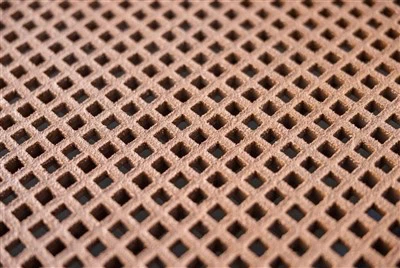
As a supplier of mini mesh grating, I understand the significance of proper packaging methods to ensure that our products reach our customers in pristine condition. Mini mesh grating, known for its versatility and wide range of applications, comes in different forms such as FRP Mini Mesh Grating, Micro Mesh Grating, FRP Walkway Grating, FRP Micro Mesh Grating, and GRP Mini Mesh Grating. Each of these products has unique characteristics that need to be considered when it comes to packaging.
1. Protective Wrapping
One of the most fundamental packaging methods for mini mesh grating is protective wrapping. This involves using materials like plastic film or bubble wrap to cover the grating. Plastic film provides a basic barrier against dust, dirt, and minor scratches. It is a cost - effective solution that can be easily applied to the grating. Bubble wrap, on the other hand, offers an extra layer of cushioning. The air bubbles in the wrap absorb shock and prevent the grating from getting damaged during handling and transportation.
When using plastic film, it is important to ensure that the entire surface of the grating is covered. The film should be tightly wrapped around the edges to prevent it from coming loose. For bubble wrap, it can be cut to the appropriate size and then wrapped around the grating. The edges can be secured with tape to keep the wrap in place.
2. Wooden Crating
Wooden crating is a more robust packaging option, especially for larger orders or when the grating needs to be shipped over long distances. Wooden crates provide a high level of protection against impacts, vibrations, and moisture. The crates can be custom - made to fit the exact dimensions of the mini mesh grating, ensuring a snug fit.
The construction of the wooden crate is crucial. It should have a strong frame made of thick wooden beams, and the sides should be covered with plywood. The bottom of the crate can be reinforced to support the weight of the grating. Before placing the grating in the crate, it is advisable to line the inside with a layer of protective material such as foam or cardboard to further cushion the product.
3. Palletizing
Palletizing is a widely used packaging method in the logistics industry. It involves placing the mini mesh grating on a pallet and securing it in place. Pallets are typically made of wood, plastic, or metal. Wooden pallets are the most common due to their affordability and availability.
To palletize the grating, the products are first arranged neatly on the pallet. They can be stacked in layers, with a layer of protective material such as cardboard or foam between each layer to prevent scratching. Once the grating is on the pallet, it can be secured using straps or shrink - wrap. Straps provide a strong binding force, while shrink - wrap conforms to the shape of the load and provides additional protection against dust and dirt.
4. Foam Insertion
For mini mesh grating, foam insertion can be an effective way to protect its delicate structure. Foam inserts can be custom - cut to fit the shape of the grating. They are placed around the edges and in between the individual pieces of grating to absorb shock and prevent movement during transit.
There are different types of foam available, such as polyurethane foam and polyethylene foam. Polyurethane foam is known for its high - density and excellent cushioning properties. Polyethylene foam, on the other hand, is more lightweight and has good chemical resistance. The choice of foam depends on the specific requirements of the grating and the shipping conditions.
5. Vacuum Packaging
Vacuum packaging is a specialized method that can be used for certain types of mini mesh grating. It involves removing the air from the packaging and sealing it tightly. This method helps to prevent the growth of mold and mildew, as well as protecting the grating from oxidation.
To vacuum - pack the grating, it is first placed in a vacuum - sealable bag. The air is then removed using a vacuum sealer, and the bag is sealed. Vacuum packaging is particularly useful for gratings that are made of materials that are sensitive to moisture and air, such as some types of FRP.


Considerations for Different Types of Mini Mesh Grating
- FRP Mini Mesh Grating: This type of grating is lightweight and corrosion - resistant. However, it can be relatively brittle compared to some other materials. Therefore, when packaging FRP Mini Mesh Grating, more emphasis should be placed on shock - absorbing materials such as bubble wrap and foam inserts.
- Micro Mesh Grating: The fine mesh structure of Micro Mesh Grating makes it more vulnerable to damage. Protective wrapping and foam insertion are essential to prevent the mesh from getting deformed or broken.
- FRP Walkway Grating: Since FRP Walkway Grating is often used in high - traffic areas, it needs to be packaged in a way that ensures its structural integrity. Wooden crating or palletizing with proper securing methods are recommended.
- FRP Micro Mesh Grating: Similar to micro mesh grating, FRP Micro Mesh Grating requires careful packaging. The combination of the FRP material and the fine mesh structure calls for a multi - layer approach, including protective wrapping and foam inserts.
- GRP Mini Mesh Grating: GRP Mini Mesh Grating has its own set of characteristics. It is important to protect it from scratches and impacts during packaging. Vacuum packaging can also be considered for long - term storage and protection.
Conclusion
Proper packaging of mini mesh grating is essential to maintain its quality and functionality. By choosing the right packaging methods, such as protective wrapping, wooden crating, palletizing, foam insertion, and vacuum packaging, we can ensure that our products reach our customers in the best possible condition.
If you are interested in purchasing our high - quality mini mesh grating products, we invite you to contact us for further details and to discuss your specific requirements. We are committed to providing you with the best products and services.
References
- Packaging Handbook, Third Edition, by Hanser Gardner Publications
- Logistics and Supply Chain Management, by Martin Christopher