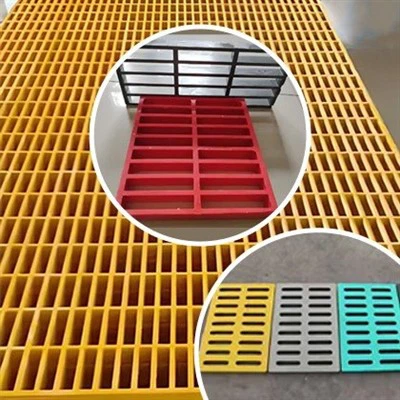
Can FRP Grating Be Used in Marine Applications?
As a supplier of FRP (Fiber - Reinforced Plastic) grating, I am often asked whether our products can be used in marine applications. The answer is a resounding yes, and in this blog, I will delve into the reasons why FRP grating is an excellent choice for the harsh marine environment.
The Harsh Marine Environment
The marine environment is extremely challenging. It is characterized by high humidity, constant exposure to saltwater, strong winds, and significant temperature variations. These conditions pose serious threats to many traditional materials. For instance, steel grating, which is commonly used in non - marine settings, is highly susceptible to corrosion in saltwater. The salt in the water accelerates the oxidation process, leading to rust formation. Over time, rust weakens the structure of the grating, reducing its load - bearing capacity and posing safety risks.
Concrete grating, on the other hand, is heavy and can crack under the stress of waves and temperature changes. Its porous nature also allows saltwater to penetrate, which can cause internal damage and deterioration.
Advantages of FRP Grating in Marine Applications
- Corrosion Resistance
One of the most significant advantages of FRP grating in marine applications is its exceptional corrosion resistance. The resin matrix used in FRP, combined with the reinforcing fibers, forms a protective barrier against the corrosive effects of saltwater. Unlike metal gratings, FRP grating does not rust or corrode. This means that it can maintain its structural integrity and appearance for a long time in the marine environment. For example, in a marine oil platform, where the grating is continuously exposed to salt spray and seawater, FRP grating can last for decades without significant degradation. - Lightweight
FRP grating is much lighter than traditional materials such as steel and concrete. This lightweight property makes it easier to handle and install, especially in marine construction projects where access can be difficult. For offshore platforms or ships, the reduced weight of FRP grating also helps to lower the overall weight of the structure, which can lead to fuel savings in the case of vessels. Additionally, the ease of installation means that projects can be completed more quickly, reducing downtime and costs. - High Strength - to - Weight Ratio
Despite its lightweight, FRP grating has a high strength - to - weight ratio. It can withstand heavy loads, making it suitable for a variety of marine applications, including walkways, platforms, and stair treads. The fibers in the FRP provide excellent tensile strength, while the resin matrix distributes the load evenly across the structure. This allows the grating to support the weight of equipment, personnel, and other loads without deformation. - Slip Resistance
Safety is a top priority in marine environments. FRP grating can be manufactured with a slip - resistant surface, which is crucial for preventing accidents on wet or oily surfaces. The slip - resistant properties are achieved through various methods, such as adding a grit - filled topcoat or using a molded surface texture. This makes FRP grating an ideal choice for walkways and platforms on ships, docks, and offshore installations. - Low Maintenance
Due to its corrosion resistance and durability, FRP grating requires minimal maintenance. Unlike metal gratings that need regular painting and inspection for rust, FRP grating only needs occasional cleaning. This reduces the long - term maintenance costs and ensures that the grating remains in good condition with less effort.
Types of FRP Grating for Marine Applications
There are several types of FRP grating available that are well - suited for marine applications.
- FRP Walkway Grating: This type of grating is designed specifically for walkways. It provides a safe and reliable surface for personnel to walk on, with its slip - resistant properties and appropriate load - bearing capacity. It is often used on ships, docks, and offshore platforms where people need to move around safely.
- GRP Moulded Grating: GRP (Glass - Reinforced Plastic) moulded grating is formed by a molding process. It has a uniform and smooth surface, which is not only aesthetically pleasing but also easy to clean. It is suitable for areas where a high - quality appearance is required, such as in some luxury yachts or high - end marine facilities.
- GRP Pultruded Grating: Pultruded grating is produced by a pultrusion process, which results in a grating with high strength and stiffness. It is often used in applications where heavy loads need to be supported, such as in industrial areas on offshore platforms or in large - scale shipbuilding.
- GRP Mini Mesh Grating: This type of grating has a fine - mesh structure, which provides a high - level of safety and is suitable for areas where small objects need to be prevented from passing through. It can be used in areas such as machinery enclosures on ships or in some sensitive marine equipment areas.
- Moulded Fibreglass Grating: Similar to GRP moulded grating, moulded fibreglass grating offers good corrosion resistance and a smooth finish. It is a versatile option that can be used in a wide range of marine applications.
Examples of Successful Marine Applications
There are numerous successful examples of FRP grating being used in the marine industry. In many offshore oil and gas platforms, FRP grating is used for walkways, platforms, and stair treads. The long - term performance of these gratings has proven their reliability in the harsh marine environment. On cruise ships, FRP grating is used in public areas and engine rooms. Its corrosion resistance, slip - resistance, and aesthetic appeal make it a popular choice.
In naval vessels, FRP grating is often used in areas where weight reduction is critical, such as in the superstructure. The light weight of the grating helps to improve the vessel's performance and fuel efficiency.
Conclusion and Call to Action
In conclusion, FRP grating is an excellent choice for marine applications. Its corrosion resistance, lightweight, high strength - to - weight ratio, slip resistance, and low maintenance make it a superior alternative to traditional materials. Whether you are building a new offshore platform, outfitting a ship, or renovating a dock, FRP grating can meet your needs and provide long - term value.


If you are considering using FRP grating for your marine project, I encourage you to contact us for more information. We have a wide range of FRP grating products to suit different applications and requirements. Our team of experts can provide you with professional advice and support to help you make the best choice. Do not hesitate to reach out to us to start a procurement discussion and find the ideal FRP grating solution for your marine project.
References
- "Handbook of Fiber - Reinforced Plastic (FRP) Composites for Civil and Structural Engineering."
- "Marine Coatings and Corrosion Protection: A Practical Guide."
- Engineering journals related to marine applications and composite materials