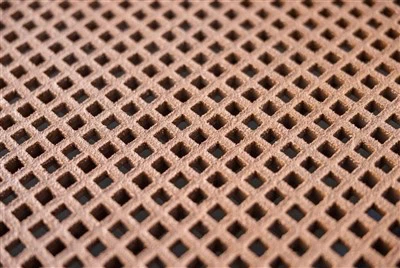
Hey there! As a supplier of FRP Mini Mesh Grating, I often get asked about how well it stands up against saltwater corrosion. It's a crucial question, especially for applications in marine environments, coastal areas, and other places where exposure to saltwater is a constant threat. In this blog, I'll dive into the details of how FRP Mini Mesh Grating fares when it comes to resisting saltwater corrosion.
What is FRP Mini Mesh Grating?
First off, let's quickly go over what FRP Mini Mesh Grating is. FRP stands for Fiber Reinforced Plastic. It's a composite material made up of a polymer matrix reinforced with fibers, usually glass fibers. The mini mesh design means it has a small, closely spaced grid pattern, which offers a high strength - to - weight ratio and provides a non - slip surface.
There are different types of FRP Mini Mesh Grating, such as FRP Walkway Grating, FRP Micro Mesh Grating, and GRP Mini Mesh Grating. Each type has its own unique characteristics and applications, but they all share the basic properties of FRP.
The Problem with Saltwater Corrosion
Saltwater is a highly corrosive environment. It contains a high concentration of salts, mainly sodium chloride, which can cause significant damage to many materials. Metals, for example, are very susceptible to saltwater corrosion. When metal is exposed to saltwater, an electrochemical reaction occurs. The saltwater acts as an electrolyte, and the metal begins to oxidize, leading to rust and degradation. This can weaken the structure and reduce its lifespan.
In contrast, FRP Mini Mesh Grating has some inherent properties that make it a great candidate for withstanding saltwater corrosion.
How FRP Mini Mesh Grating Resists Saltwater Corrosion
1. Chemical Resistance
The polymer matrix in FRP Mini Mesh Grating is designed to be chemically resistant. Most FRP materials are made from resins like polyester, vinyl ester, or epoxy. These resins have excellent resistance to a wide range of chemicals, including the salts found in saltwater. The chemical bonds in the resin are strong and stable, preventing the saltwater from attacking and breaking down the material.


For example, vinyl ester resins are known for their high resistance to corrosion. They have a more chemical - resistant backbone compared to polyester resins, making them a popular choice for applications in harsh environments like saltwater.
2. Non - Metallic Nature
Since FRP is a non - metallic material, it doesn't undergo the same electrochemical reactions as metals in saltwater. There is no iron or other metal to oxidize and form rust. This eliminates the main cause of corrosion in metals, giving FRP Mini Mesh Grating a significant advantage in saltwater environments.
3. Barrier Effect
The fibers in FRP act as a barrier against the penetration of saltwater. The glass fibers are embedded in the resin matrix, creating a structure that is difficult for the saltwater to penetrate. Even if some saltwater manages to reach the surface of the grating, the fibers help to prevent it from spreading further into the material.
Real - World Applications and Performance
FRP Mini Mesh Grating has been used in many real - world applications where saltwater corrosion is a concern. In marine platforms, docks, and ship decks, it has proven to be a reliable choice. For instance, on offshore oil rigs, where the grating is constantly exposed to saltwater spray and high humidity, FRP Mini Mesh Grating has shown excellent long - term performance.
In coastal walkways and bridges, the grating provides a safe and durable surface that can withstand the harsh coastal environment. It doesn't rust or corrode like metal gratings, which means less maintenance and a longer service life.
Factors Affecting Corrosion Resistance
While FRP Mini Mesh Grating has good resistance to saltwater corrosion, there are some factors that can affect its performance.
1. Resin Type
As mentioned earlier, the type of resin used in the FRP has a big impact on its corrosion resistance. Vinyl ester resins generally offer better resistance than polyester resins, especially in highly corrosive environments. Epoxy resins also have excellent chemical resistance but can be more expensive.
2. Exposure Time and Conditions
The longer the grating is exposed to saltwater, the more likely it is to experience some degree of degradation. Also, factors like temperature, humidity, and the concentration of salt in the water can affect the corrosion rate. For example, in warmer waters, the chemical reactions may occur more quickly.
3. Surface Finish
The surface finish of the grating can also play a role. A smooth surface finish can make it more difficult for salt and other contaminants to adhere to the grating, reducing the risk of corrosion.
Maintenance Tips
To ensure the long - term performance of FRP Mini Mesh Grating in saltwater environments, some maintenance is required.
1. Regular Cleaning
Periodically cleaning the grating with fresh water can help remove salt and other contaminants. This can prevent the build - up of salt, which could potentially cause damage over time.
2. Inspection
Regularly inspect the grating for any signs of damage or degradation. If any cracks or delamination are found, they should be repaired promptly to prevent further damage.
Conclusion
In conclusion, FRP Mini Mesh Grating is a great option for applications where saltwater corrosion is a concern. Its chemical resistance, non - metallic nature, and barrier effect make it well - suited to withstand the harsh conditions of saltwater environments. While there are some factors that can affect its performance, with proper selection of resin, maintenance, and inspection, it can provide a long - lasting and reliable solution.
If you're looking for a high - quality FRP Mini Mesh Grating for your project, whether it's for a marine application, a coastal structure, or any other place where saltwater corrosion is an issue, feel free to reach out. We're here to help you find the right grating for your needs and answer any questions you might have. Let's start a conversation about your project and see how our FRP Mini Mesh Grating can meet your requirements.
References
- "Fiber - Reinforced Polymer Composites: Materials, Manufacturing, and Design" by P.K. Mallick
- "Corrosion Engineering: Principles and Practice" by Pierre R. Roberge