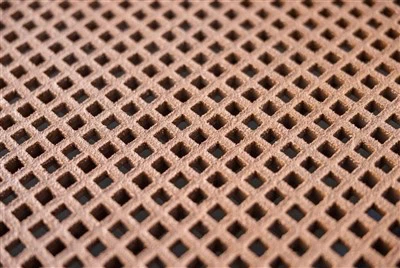
Hey there! As a supplier of FRP grating, I often get asked about the resistance of FRP grating to solvents. It's a crucial topic, especially for industries where exposure to various solvents is common. So, let's dive right in and explore this aspect in detail.
Understanding FRP Grating
First off, for those who aren't familiar, FRP stands for Fiber - Reinforced Plastic. FRP grating is a composite material made of a polymer matrix reinforced with fibers, usually glass fibers. This combination gives it some great properties like high strength, lightweight, and corrosion resistance.


There are different types of FRP grating available. We've got GRP Moulded Grating, which is made by a molding process. This type of grating has a smooth surface and is known for its good load - bearing capacity. Then there's Industrial Gratings, designed specifically for industrial applications. And GRP Pultruded Grating, which is made through a pultrusion process, offering high strength and stiffness.
Solvent Resistance of FRP Grating
When it comes to solvent resistance, FRP grating has a lot going for it. But it's not a one - size - fits - all situation. The resistance depends on several factors, including the type of resin used in the FRP, the concentration of the solvent, the temperature, and the duration of exposure.
Resin Types
The resin is a key factor in determining the solvent resistance of FRP grating. There are different types of resins commonly used in FRP, such as polyester, vinyl ester, and epoxy.
Polyester resins are widely used because they are cost - effective. They offer good resistance to many common solvents, but they may not be as resistant as other resins in more aggressive chemical environments. For example, they can be attacked by strong acids and alkalis over time.
Vinyl ester resins, on the other hand, provide better chemical resistance compared to polyester resins. They have a higher cross - linking density, which makes them more resistant to solvents. They are often used in applications where there is a higher risk of exposure to chemicals.
Epoxy resins are known for their excellent chemical resistance. They can withstand a wide range of solvents, including strong acids, alkalis, and organic solvents. However, they are also more expensive than polyester and vinyl ester resins.
Solvent Concentration
The concentration of the solvent plays a big role in how the FRP grating will react. Generally, higher concentrations of solvents are more likely to cause damage to the grating. For example, a low - concentration solution of a mild solvent may have little to no effect on the FRP grating, while a high - concentration solution of a strong solvent can cause swelling, cracking, or even dissolution of the resin.
Temperature
Temperature also affects the solvent resistance of FRP grating. Higher temperatures can accelerate the chemical reactions between the solvent and the resin. This means that at elevated temperatures, the grating may be more vulnerable to solvent attack. For instance, a solvent that has no effect on the grating at room temperature may cause significant damage at a higher temperature.
Duration of Exposure
The longer the FRP grating is exposed to a solvent, the greater the chance of damage. Short - term exposure to a solvent may not cause any visible damage, but prolonged exposure can lead to degradation of the resin and fibers, reducing the strength and integrity of the grating.
Examples of Solvent Resistance
Let's look at some common solvents and how FRP grating responds to them.
Water
Water is a common solvent, and FRP grating generally has good resistance to it. Most FRP gratings can withstand long - term exposure to water without significant damage. However, if the water contains impurities or chemicals, the situation may be different. For example, water with a high concentration of salts or acids can corrode the grating over time.
Acids
The resistance of FRP grating to acids depends on the type of acid and its concentration. Mild acids like acetic acid may have little effect on the grating, especially if it's made with a resin that has good acid resistance. However, strong acids like sulfuric acid can be very aggressive. Vinyl ester and epoxy resins offer better resistance to strong acids compared to polyester resins.
Alkalis
Similar to acids, the resistance to alkalis varies depending on the type of resin. Epoxy resins are generally more resistant to alkalis than polyester resins. A high - concentration solution of sodium hydroxide, for example, can cause significant damage to a polyester - based FRP grating, while an epoxy - based grating may be able to withstand it for a longer period.
Organic Solvents
Organic solvents like acetone, toluene, and xylene can also affect FRP grating. The resistance to these solvents depends on the resin type. Epoxy resins usually have better resistance to organic solvents compared to polyester resins. Some organic solvents can cause swelling or softening of the resin, which can weaken the grating.
Importance of Solvent Resistance in Different Industries
The solvent resistance of FRP grating is crucial in many industries.
In the chemical industry, where there is a high risk of exposure to various solvents and chemicals, FRP grating is a popular choice. Its resistance to solvents helps to ensure the safety and durability of the equipment and structures. For example, in a chemical plant, FRP grating can be used as walkways, platforms, and stair treads, providing a safe and corrosion - resistant surface.
In the food and beverage industry, FRP grating is also widely used. It can withstand the cleaning agents and solvents used in the industry, ensuring a hygienic and long - lasting surface. The smooth surface of FRP grating also makes it easy to clean, which is important in food - processing environments.
In the marine industry, FRP grating is used on boats, docks, and offshore platforms. It can resist the effects of seawater, which contains salts and other chemicals. The lightweight nature of FRP grating also makes it a practical choice for marine applications.
Conclusion
So, in conclusion, the resistance of FRP grating to solvents is a complex topic that depends on several factors. As a supplier, we understand the importance of providing the right type of FRP grating for different applications. Whether you need a grating that can withstand strong acids in a chemical plant or one that can resist seawater in a marine environment, we've got you covered.
If you're interested in purchasing FRP grating for your project, we'd love to have a chat with you. We can help you choose the right type of grating based on your specific requirements, including the solvent resistance you need. Contact us to start a discussion about your procurement needs.
References
- "Handbook of FRP Composites" by John Wiley & Sons
- "Fiber - Reinforced Polymer Composites: Materials, Manufacturing, and Design" by CRC Press
- Industry reports on FRP grating applications and performance.